
If you’ve started working on your business’s local SEO, you’re probably wondering how long it will take before customers start calling. It’s a fair question, especially when you’re spending money every month and want to see something in return.
Most Australian businesses should plan for around 3–6 months to see meaningful progress from local SEO, although some improvements can lead to enquiries sooner. In competitive markets, building consistent leads can take 6–12 months or longer.
There isn’t a fixed timeline for every business. A local plumber in a small town faces different competition from a dental clinic in Sydney.
The good news is that you don’t have to wait six months to find out whether things are moving in the right direction.
Let’s look at what happens during a local SEO campaign, what affects your results and how to tell whether your investment is working.
How Long Does Local SEO Actually Take?
Local SEO is the process of helping your business appear when nearby customers search for the services you offer.
For example, someone might search for “electrician near me” or “emergency plumber Melbourne”. If your business appears in Google Search or Google Maps, that person can visit your website, call you or request a quote.
But getting there takes work.
Your website needs to explain your services clearly. Your Google Business Profile needs accurate information, and Google needs time to discover and assess your improvements.
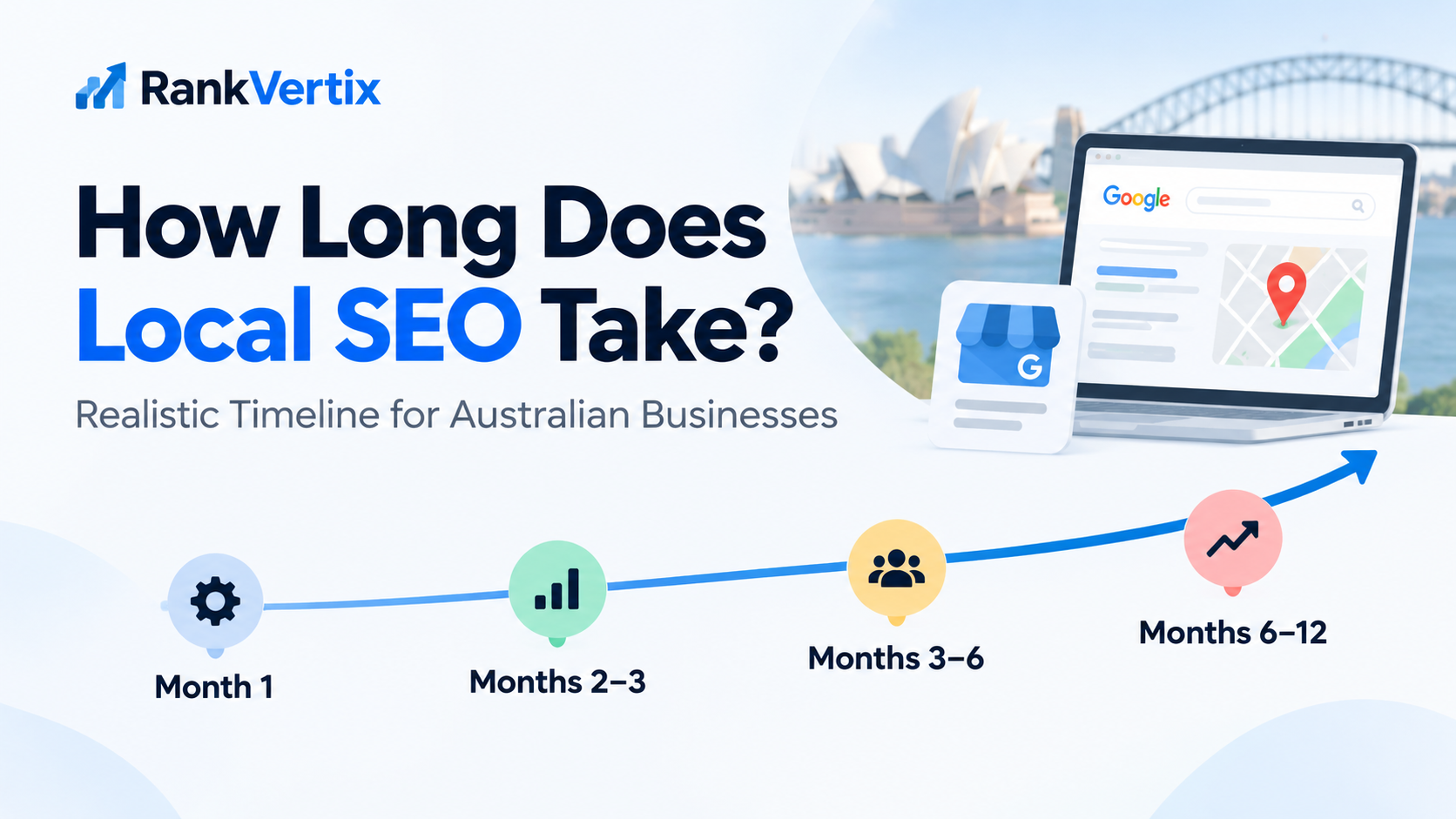
Here’s a realistic planning timeline.
| Timeframe | What You Might Notice |
|---|---|
| First month | Website fixes, profile improvements and early visibility changes |
| Months 2–3 | More impressions, better visibility for selected searches and possible new enquiries |
| Months 3–6 | More consistent search traffic and potential growth in qualified leads |
| Months 6–12 | Stronger visibility across relevant searches and opportunities for sustained lead growth |
These are estimates, not guaranteed milestones. Some businesses already have enough visibility to generate enquiries after a few improvements. Others need considerably more work.
Google also explains that changes to websites can take anywhere from days to several months to affect search results.
What Happens During the First Six Months of Local SEO?
Understanding what happens behind the scenes makes it easier to judge your progress.
Month 1: Finding and Fixing Problems
The first month usually starts with checking your website, Google Business Profile and existing search performance.
A local SEO company may find issues you weren’t aware of.
Your business might have the wrong primary category on Google, service pages that don’t explain what you offer, or contact buttons that are difficult to use on mobile.
These problems can cost you enquiries even when people find your business.
During this stage, the work often includes:
- Reviewing your Google Business Profile
- Checking important website pages
- Researching local customer searches
- Fixing technical SEO problems
- Improving business information and contact options
The goal isn’t simply to make your website look better. It’s to remove problems that stop potential customers from finding or contacting you.
Months 2–3: Building Local Search Visibility
Once the main issues are addressed, attention turns towards helping more relevant customers discover your business.
This may involve improving service pages, creating useful local content and strengthening the connection between your website and Google Business Profile.
You might start noticing more impressions in Google Search Console.
An impression means your website appeared in search results. It doesn’t mean someone visited your site, but it can be an early sign of increased visibility.
You may also receive your first additional enquiries during this period.
Just remember that early improvements don’t always translate into steady leads immediately.
Months 3–6: Turning Visibility Into Enquiries
By this stage, you should have enough information to assess whether your SEO work is heading in the right direction.
Are more people discovering your services? Are relevant pages receiving traffic? Have phone calls or quote requests increased?
For example, a Brisbane electrician may start receiving more visits to an emergency electrical services page.
That’s useful progress, but the real question is whether those visitors are making contact.
If traffic increases without enquiries, the next step may be improving page content, mobile usability, calls to action or the quote request process.
Local SEO isn’t only about reaching higher positions. It’s also about helping visitors become customers.
Months 6–12: Working Towards Consistent Results
Businesses operating in competitive areas may need longer to build dependable visibility.
A new business competing against established companies in central Melbourne won’t necessarily achieve the same results as a well-known local business with an existing website and customer reviews.
During this period, the focus often shifts towards improving pages that already show promise and identifying additional opportunities.
This could include expanding genuinely useful service information, improving underperforming pages and building a stronger local reputation.
However, results still need regular review. SEO progress isn’t always a straight line.
What Factors Affect How Quickly Local SEO Generates Leads?
Two businesses can start local SEO on the same day and see very different outcomes.
Here’s why.
1. Competition in Your Local Area
Competition is one of the biggest factors.
Imagine two plumbing businesses.
One operates in a smaller regional town with relatively few established competitors. The other serves several busy Sydney suburbs where many plumbing companies already have strong online profiles.
The second business may need more work before it becomes competitive.
That’s why local SEO timelines should reflect your actual service area rather than an agency’s standard promise.
2. Your Website’s Current Condition
An established website with useful service pages and a good technical setup has a different starting point from a newly launched website.
If your site loads poorly, contains outdated information or makes it difficult to request a quote, those problems need attention first.
Sometimes fixing a clear issue can improve results relatively quickly.
Other websites need a more extensive rebuild before they can compete effectively.
3. Google Business Profile Optimisation
Your Google Business Profile plays an important role in local visibility.
According to Google’s guidance, local results are mainly influenced by relevance, distance and prominence.
That means how closely your business matches a search, how far it is from the searcher and how well-known it is can all affect where it appears.
Accurate categories, business details, genuine customer reviews and relevant information help customers understand your business.
However, optimising your Google Business Profile doesn’t guarantee a top-three Google Maps position.
4. Customer Reviews and Business Reputation
Before contacting a business, many customers want reassurance that they’re making a sensible choice.
Reviews can help them decide.
A business with genuine, detailed customer feedback may appear more trustworthy than one with very little information.
You shouldn’t expect reviews alone to solve every ranking problem, though.
They work best alongside accurate business information, a useful website and reliable service.
5. How People Search for Your Services
Not every visitor is ready to become a customer.
Someone searching “how to fix a leaking tap” may simply want instructions.
Someone searching “emergency plumber near me” is more likely to need immediate help.
Both searches can bring traffic, but their chances of generating enquiries are different.
Good local keyword research focuses on the services people need and the language they use when they’re ready to take action.
Does Local SEO Work Faster for Small Australian Businesses?
It can, depending on the location and competition.
A small cleaning business operating in a less competitive area may see movement sooner than a company trying to rank across an entire capital city.
However, being a small business doesn’t automatically mean quick results.
Your starting reputation, website quality and customer demand still matter.
For Australian tradies, local SEO can be particularly useful because many customers search when they need a specific service.
Think about someone looking for a roof repairer after heavy rain or an air conditioning technician during summer.
These searches may lead to enquiries when your business is visible, relevant and easy to contact.
The key is targeting the right customers, not just attracting more website visitors.
How Can You Tell if Local SEO Is Generating Results?
If you’re paying for SEO, you should know what you’re getting.
A report full of keyword positions might look impressive, but rankings alone don’t pay your bills.
Instead, look at these measurements.
Organic Traffic From Relevant Searches
Check whether more people are visiting the pages that describe your services.
Google Search Console can help you see which search terms bring visibility and clicks.
A rise in traffic is encouraging, especially when visitors are finding pages connected to your actual services.
Google Business Profile Interactions
Your Google Business Profile performance data can show useful customer actions, such as calls, website clicks and direction requests.
These interactions help you understand whether people are engaging with your listing.
Remember that an interaction isn’t necessarily a confirmed customer.
Phone Calls and Quote Requests
For most local service businesses, these are among the most useful measurements.
Track contact form submissions, calls and quote requests wherever possible.
Ask new customers how they found you, too.
This won’t give you perfect attribution, but it can help you understand which marketing activities are bringing real opportunities.
Actual Customers and Revenue
An enquiry is valuable only when it has the potential to become business.
Suppose your website receives 20 enquiries in a month, but only two are relevant to your services.
That’s different from receiving 10 enquiries from people who genuinely need what you offer.
Focus on lead quality and the customers you gain, not just bigger numbers in your monthly report.
Can You Speed Up Local SEO Results?
You can’t force Google to rank your business overnight, but you can make better use of your time.
Start with the issues most likely to affect customers.
If your phone number is wrong, correct it. If your important service pages are missing, improve them. If customers struggle to contact you on mobile, make that process easier.
Then concentrate on the services and locations that matter most to your business.
You don’t need dozens of nearly identical suburb pages. A smaller number of useful, accurate pages may serve your customers better.
It’s also worth checking that your website clearly explains what makes your business a suitable choice.
Customers want to know what you do, where you operate and how to contact you.
Make those answers easy to find.
Should You Hire a Local SEO Company or Manage It Yourself?
Some basic local SEO tasks are manageable for business owners.
You can update your Google Business Profile, respond to customer reviews and check that your business information is correct.
However, technical website problems, search analysis and ongoing content improvements may require more experience.
Working with a local SEO company can make sense when you don’t have the time or knowledge to manage everything yourself.
Before choosing an agency, ask what they’ll work on during the first three months, how they’ll measure enquiries and what results are realistic for your market.
Be cautious about promises of guaranteed rankings or a fixed number of leads.
A reliable agency should explain its approach and keep you informed about progress.
Frequently Asked Questions
Can local SEO generate leads in the first month?
Yes, it’s possible, particularly if your business already has some search visibility and a fix makes it easier for customers to find or contact you. However, first-month leads shouldn’t be treated as a guaranteed outcome.
Is three months enough to see local SEO results?
Three months can be enough to identify early improvements in visibility, traffic and enquiries. For competitive searches, it may be too early to judge the full value of a campaign.
Is local SEO worth it for Australian small businesses?
Local SEO can be worthwhile when nearby customers actively search for your services. Its value depends on competition, your marketing costs, lead quality and how many enquiries become paying customers.
Why is my website getting traffic but no enquiries?
Visitors may be researching rather than looking to buy. Your pages may also lack clear service details, trust signals or easy contact options. Review visitor intent and the enquiry process before assuming you need more traffic.
Does local SEO stop working if you stop paying an agency?
Your website and existing content don’t automatically disappear from Google. However, competitors can improve, business information can become outdated and rankings may change. Some ongoing maintenance is usually sensible.
Final Thoughts
Local SEO takes patience, but you shouldn’t have to guess whether it’s working.
For many Australian businesses, three to six months is a reasonable period to assess early progress, while stronger and more consistent results may require longer.
What matters most isn’t reaching a particular ranking by a particular date. It’s attracting people who need your services and making it easier for them to become customers.
At RankVertix, we help businesses improve their local search presence through practical SEO work focused on visibility and customer enquiries.
If you’re unsure why your business isn’t attracting enough local leads, explore our SEO services and find out which improvements could make the biggest difference.